


Bridging the Experience Gap in Cybersecurity Careers
- Use Training Platforms: TryHackMe and Hack The Box offer virtual labs for ethical hacking and security skills.
- Participate in CTFs (Capture The Flag): Competitions simulate real-world challenges in cryptography, web security, and more.
- Build a Portfolio: Showcase projects, certifications, and CTF achievements to demonstrate your skills.
- Earn Certifications: Start with beginner-friendly options like CompTIA Security+ and GISF.
- Network: Join LinkedIn groups, attend meetups, and connect with industry professionals.
Cybersecurity thrives on continuous learning. Start small, practice regularly, and use these tools to stand out in a competitive field.
How to get into Cybersecurity with NO Experience – The Ultimate Guide
Using Training Platforms and Labs
Training platforms offer a controlled environment where you can build cybersecurity skills through hands-on practice. They bridge the gap between learning concepts and gaining the practical experience employers look for. These setups let you develop skills without putting real systems at risk.
TryHackMe and Hack The Box
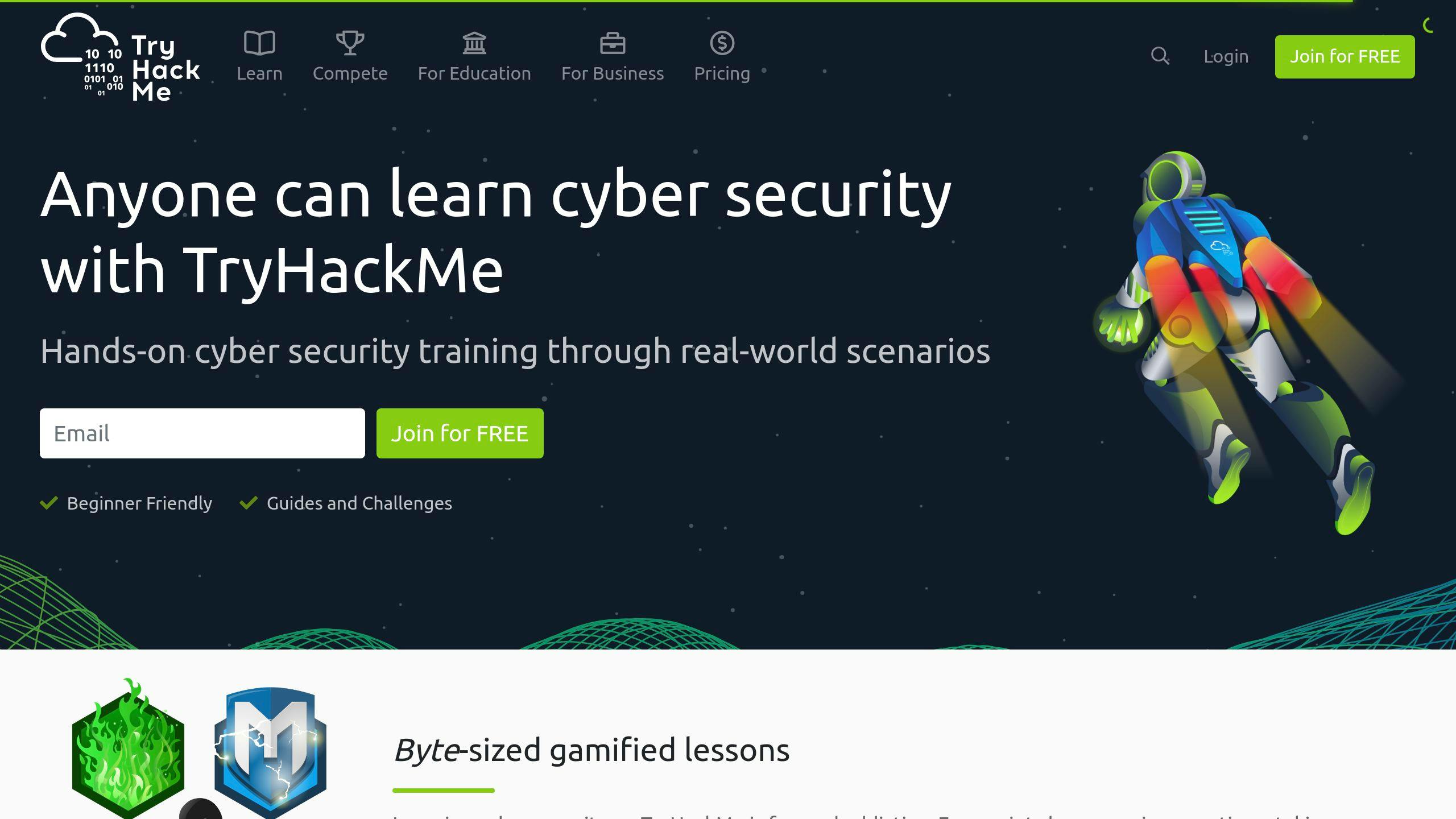
Platforms like TryHackMe and Hack The Box have changed the game for learning cybersecurity. They provide interactive spaces to practice ethical hacking, penetration testing, and security techniques. TryHackMe leans on guided exercises using virtual machines to teach vulnerabilities, while Hack The Box pushes users with challenge-based tasks inspired by real-world scenarios, helping them refine their skills step by step.
Structured Learning Paths
Structured learning paths offer a clear roadmap for building cybersecurity expertise. Programs such as Cybersecurity Career Academy combine basic IT knowledge with advanced techniques through practical exercises. This step-by-step approach ensures learners develop skills that match industry needs.
Specialized platforms like Blue Team Labs focus on defensive security, offering scenarios like incident response and threat analysis. Many of these platforms provide both free and paid options, making them accessible to individuals at various skill levels.
In addition to structured platforms, Capture The Flag (CTF) competitions present a more dynamic way to test and apply your skills in simulated attack-and-defense challenges.
Capture The Flag (CTF) Competitions
CTF competitions are an exciting way to put your cybersecurity skills to the test in real-world-like scenarios. They allow participants to gain hands-on experience and bridge the gap between theory and practice in a dynamic setting.
What Are CTF Competitions?
Capture The Flag (CTF) events are cybersecurity challenges that focus on areas like cryptography, reverse engineering, and web security. These competitions replicate real-world problems in a safe, controlled environment, giving participants a chance to practice both offensive and defensive security techniques.
“CTFs are a fun and effective way to enter and grow in cybersecurity.” – Google [2]
The mix of competition and learning is what makes CTFs so engaging. Take Google’s CTF, for example – it attracts skilled participants from all over the globe [2]. Events like this encourage competitors to push their limits, refine their technical abilities, and stay updated on evolving security practices.
Getting Started with CTFs
If you’re new to cybersecurity, CTFs are a great way to build hands-on experience. Beginner-friendly platforms like CTF365 offer challenges designed to teach foundational skills before moving on to more advanced problems.
Here are a few tips to get started:
- Start small: Focus on beginner-level challenges that align with your current knowledge.
- Join a team: Collaborate with others, especially experienced players, to learn faster and share insights.
- Make it a habit: Regular practice will help you tackle tougher challenges over time.
Another helpful resource is the documentation from past CTF events. Many competitions are recorded, with detailed explanations of solutions. These can be invaluable for learning different problem-solving techniques and technical strategies [2].
Participating in CTFs not only sharpens your skills but also adds impressive achievements to your professional portfolio. With time and consistent effort, these competitions can become a cornerstone of your cybersecurity journey.
sbb-itb-ceee48c
Building a Portfolio and Network
In cybersecurity, having technical skills is just part of the equation. To stand out, you also need to showcase your expertise and build connections with others in the field. These two elements can help close the experience gap and give your career a boost.
Creating a Portfolio
A cybersecurity portfolio is a great way to show potential employers what you can do. It provides concrete examples of your skills and accomplishments, making it easier for others to see your value.
Your portfolio should include:
- Technical projects: Examples like open-source contributions or vulnerability assessments.
- Certifications: Highlight credentials such as CompTIA A+ or CCNA.
- Achievements: Mention success in CTFs (Capture The Flag competitions) or security platforms.
For each item, explain your approach, the challenges you faced, and what you learned. If you’ve participated in bug bounty programs, detail the vulnerabilities you’ve identified and their impact. This level of detail shows not just what you’ve done, but how you think and solve problems.
Networking for Career Growth
Networking is a key part of advancing in cybersecurity. The field thrives on collaboration and knowledge-sharing, so building relationships with other professionals can open doors and provide valuable insights.
Start with an active LinkedIn profile. Use it to highlight your skills, share thoughtful posts, and connect with others in the industry. Beyond online platforms, attend conferences, workshops, and meetups – whether in-person or virtual. These events are great for learning and meeting like-minded professionals.
You can also join LinkedIn groups, security forums, or local meetups to stay connected with the community. Share your knowledge and be open to learning from others. This kind of engagement helps you build meaningful relationships that can lead to new opportunities.
Certifications and Continuous Learning
The world of cybersecurity changes quickly, making it crucial to keep learning and earning certifications. These not only prove your knowledge but also enhance the practical skills you gain from labs, competitions, and projects.
Certifications for Beginners
Starting in cybersecurity means choosing certifications that teach the basics and set you up for more advanced roles.
Here are some key certifications to consider:
| Certification | Focus Area |
|---|---|
| CompTIA Security+ | Core security concepts |
| GIAC Information Security Fundamentals (GISF) | Introductory security principles |
| CompTIA PenTest+ | Basics of penetration testing |
Once you’re ready to move forward, certifications like Certified Ethical Hacker (CEH) or Certified Information Systems Security Professional (CISSP) can help showcase advanced knowledge. If you’re in healthcare, something like Health Information Security and Privacy Practitioner (HCISPP) might be worth exploring [3].
The Need for Continuous Learning
Cybersecurity professionals can’t stop learning after earning a certification. Many certifications need renewal, ensuring you stay informed about the latest threats and practices.
Here are some ways to keep your skills sharp:
- Structured Programs: Look for courses and internships that combine theory with real-world scenarios.
- Industry Events: Attend webinars and virtual sessions led by experts to stay current.
- Hands-On Practice: Platforms like LabEx offer opportunities to dive into practical exercises [4].
Staying active in learning ensures you’re always prepared for the challenges of this ever-changing field.
Conclusion: First Steps
Key Strategies Recap
Starting a career in cybersecurity involves more than just learning theory – it’s about gaining real-world experience and practical skills. With the growing demand in this field, those who proactively build their expertise can open up exciting opportunities.
Here are some effective ways to get started:
- Hands-on Training: Use structured learning platforms to practice and strengthen your core skills.
- CTF (Capture the Flag) Challenges: Participate in beginner-friendly competitions to sharpen your problem-solving abilities and apply your knowledge.
- Certifications: Begin with entry-level certifications (as outlined earlier) to demonstrate your understanding of key concepts.
By focusing on these areas, you can lay a strong foundation for your cybersecurity journey.
Next Steps
Kick off your cybersecurity career by following this actionable plan:
| Timeline | Action | Recommended Platform |
|---|---|---|
| Week 1-4 | Build Core Skills | Blue Team Labs (Free and Paid Options) |
| Month 2 | Start Basic Training | TryHackMe Beginner Paths |
| Month 3-4 | Enter Your First CTF | Google CTF Beginners Quest |
Additionally, consider exploring programs like ThriveDX [1], which combine training with job placement opportunities. These platforms are designed to help bridge the gap between learning and landing your first role.
The key to success in cybersecurity is consistent practice and staying informed about new threats. Choose one platform to begin with, commit time regularly, and focus on building your skills step by step. With dedication, you’ll be well on your way to closing the experience gap and launching a fulfilling career in cybersecurity.
